
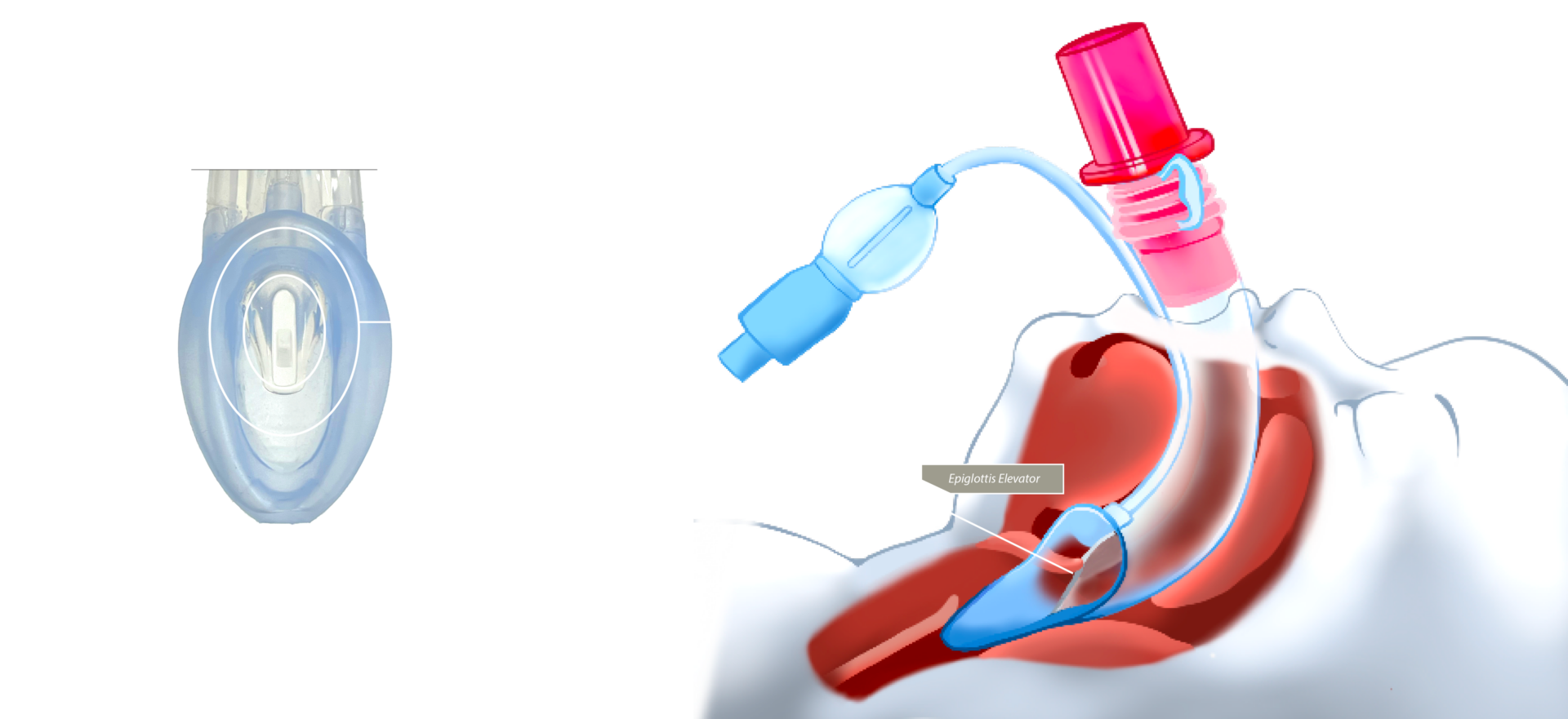
Delivering surfactant to preterm neonates has always been one of the most delicate challenges in neonatal care. AirLife introduces a unique, less invasive solution by combining the Neo-Verso™ Airway Access Adapters, the Verso™ Closed Fluid Access Catheter, and the Air-Q®3 Neo Supraglottic Airways. Together, these innovations create a completely new approach to surfactant delivery for infants weighing below 2 kg and between 2–4 kg.
✨ Why This Matters
Traditional surfactant delivery methods can be invasive and stressful for both clinicians and fragile patients. AirLife’s integrated solution brings together advanced features designed to make surfactant administration safer, easier, and more effective for the tiniest patients.
🫁 AirQ3 Neo: Designed for the Smallest Patients
- Exclusive sizing: No other supraglottic airway brand offers options for neonates under 2 kg (size 0) and infants 2–4 kg (size 0.5).
- All-silicone construction: Soft, flexible, and anatomically curved for easier placement.
- Epiglottis elevator: Lifts the epiglottis to maximize glottic opening and ensure near-perfect placement.
- ETT ramp: Built-in support for endotracheal tube placement if needed.
- Ease of use: Reduces clinician stress and improves success rates, even in emergencies.
- Extra-wide gastric inlet & dual channels: Allow suction during surfactant delivery, improving outcomes.
💬 “The laryngeal mask makes a better seal than a face mask and may improve the effectiveness of ventilation… no instruments are required to insert a laryngeal mask.”
— Neonatal Resuscitation Program (NRP), 8th Edition
🔄 Neo-Verso™ Airway Access Adapters
- Pucker valve technology: Maintains continuous ventilation while performing airway access procedures.
- Closed suction system: Replace only the catheter when needed, not the entire adapter.
- Safe ventilation: Surfactant catheters connect without disconnecting the patient from the circuit.
- Flexible options: Swivel design for easier patient repositioning.
- Durability: Adapters approved for 7 days; catheters for 72 hours.
- DEHP-free construction: Safer for neonatal use.
💬 “The most important and effective step in neonatal resuscitation is to ventilate the newborn infant’s lungs.”
— Neonatal Resuscitation Program (NRP), 9th Edition
⚡ Supporting Effective Ventilation
At the heart of neonatal resuscitation is ventilation. AirLife’s solution supports this critical step with:
- SafeT™ T-Piece Infant Resuscitator for controlled, precise ventilation.
- Air-Q®3 Supraglottic Airway for rapid placement and effective ventilation without delay.
Clinical evidence continues to reinforce that effective ventilation is the foundation of successful newborn resuscitation—and AirLife’s integrated system is designed to make it easier than ever.
🔗 Explore more:
- Manufacturer NRP Focus Webpage
- SafeT™ T-Piece Special Page
- Air-Q®3 Neo Special Page
- Neonatal Product Range